

Most people give Lake Titicaca one day. They take a boat out of Puno in the morning, stand on a reed island and climb a hill on a second one. Lunch, then back at the hotel by five. That day is good. It is also about a third of what the lake has.
We run the boats, so we know what people come back talking about and what they forget by dinner. This is the list of things to do in Lake Titicaca in the order we would give a friend. Each comes with what it costs, how long it takes, and who it is for.

The lake in three numbers
It sits at 3,812 metres, higher than any road pass in the Alps. It covers roughly 8,300 square kilometres, shared between Peru and Bolivia. And the water is cold in every month, which decides more about your day than the calendar does.
Puno, the town on the Peruvian shore, is at 3,827 metres. If you arrive from sea level you will feel it. If you arrive after two nights in Cusco you will barely notice, which is why we always suggest Cusco before Puno.
What is worth doing, ranked
1. The Uros floating islands
Nowhere else do people live on platforms they cut, lay and rebuild from reed. The islands sit twenty five minutes from the harbour, through channels in the totora beds. The visit lasts about an hour. You see how the layers are laid, step inside a reed house, and hear from the family how the island is kept afloat.
Two things to know. The reed boat ride is optional and paid to the family that rows it. And the community, not the operator, decides which island receives visitors each day. You do not choose, and neither do we. That rota is the reason the income reaches every family rather than the nearest one.
It is the one thing every visitor does. Our Uros half day is 23 dollars, with departures in the morning, at noon and in the afternoon. Morning is calmest. Our post on the Uros people covers the history the guide will not have time for.

2. Taquile, and the climb to lunch
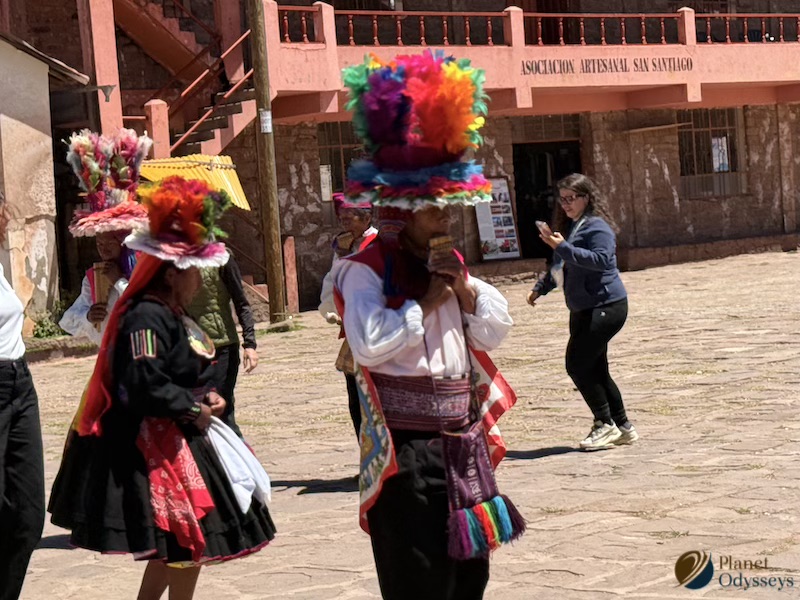
Two hours of open water from Uros, then a stepped path from the harbour. It gains about 120 metres to a village at 3,950, forty minutes taken slowly. At the top there is a square, a cooperative shop, and men knitting in doorways. On Taquile the men knit and the women weave. UNESCO listed the tradition in 2005.
Lunch is in a community kitchen: lake trout or an omelette, quinoa soup and muña tea, with the water below the window. The island decides who hosts and who cooks, and the money stays there. Then a gentler path down the far side and the long boat home.
This is the second half of our Lake Titicaca full day tour, 44 dollars with lunch. If Taquile’s knitting interests you, we wrote about why manliness there is measured in stitches, and about a whole day on the island.
3. A night with a family on Amantani
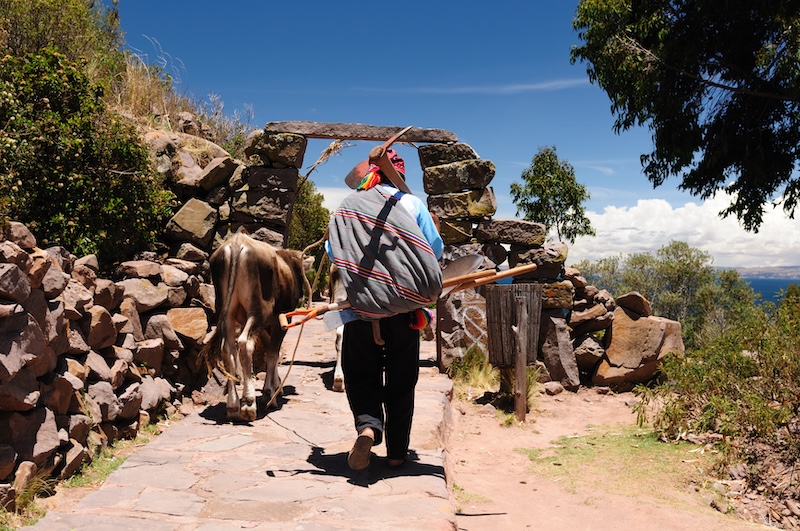
The day boats pass Amantani on the horizon. About four thousand Quechua speaking people live there in ten communities, with no cars and almost no hotels. The only real way to see it is to sleep in somebody’s house, and the families host visitors by rotation.
You arrive for lunch and climb to the temple of Pachatata at 4,150 metres for the sunset. Dinner is in your family’s kitchen. Then you are dressed in borrowed clothes for the community dance. The room is simple, the night is cold, and the electricity and internet range from little to none. People who want a hotel should not book it. People who want the lake as it is lived come back with the story of the trip.
It runs as a two day tour with Uros and Taquile for 67 dollars, four meals included. Our Amantani homestay guide describes the house, the food and what to pack.
4. The towers at Sillustani
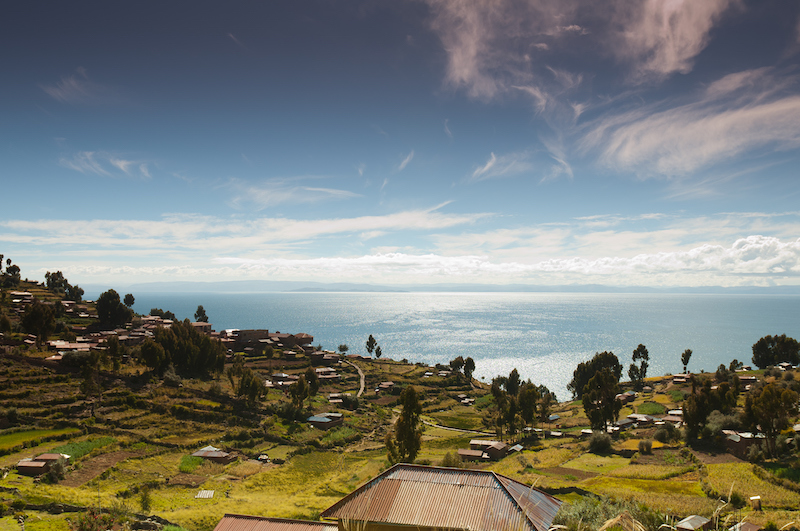
Not on the lake but above a smaller one, Umayo, half an hour from Puno by road. The chullpas are round funerary towers, wider at the top than the bottom. The Colla people built them, and the Inca kept building on the same ridge. You can read the takeover in the stonework, rough Colla courses beside fitted Inca ones. One tower still has the earth ramp that was used to build it.
Almost every visitor sees the reed islands. Far fewer see this, and it is stranger and emptier. Our Sillustani half day leaves at two in the afternoon for the light, 26 dollars, and there is a full day that pairs it with Uros at 60. The background is in our post on the history behind the chullpas.
5. Sunset from the shore, or from the deck
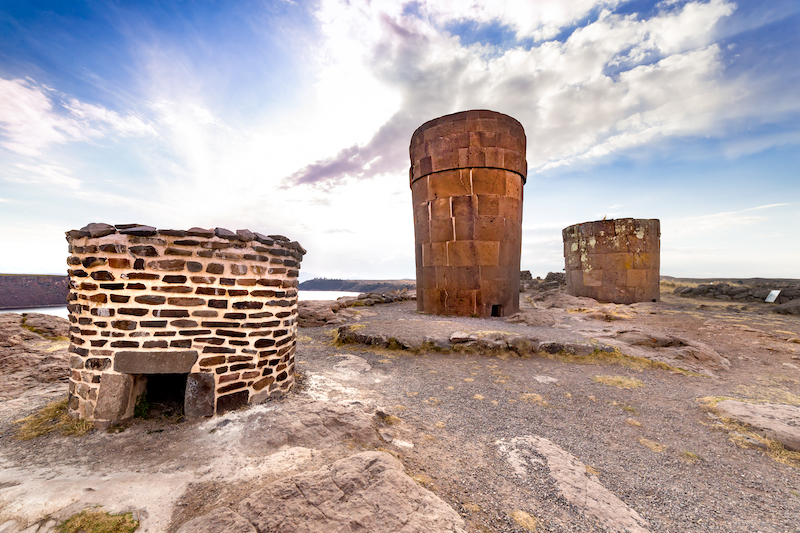
The lake goes flat in the last hour of light, and the hills on the Bolivian side turn pink. From Puno the best seats are the miradors above the town. From the water, it is the deck of the boat coming back from Taquile in the wet season, when the return runs late. Our guide to sunset on Lake Titicaca says where to stand.
6. A night under the sky, on the water
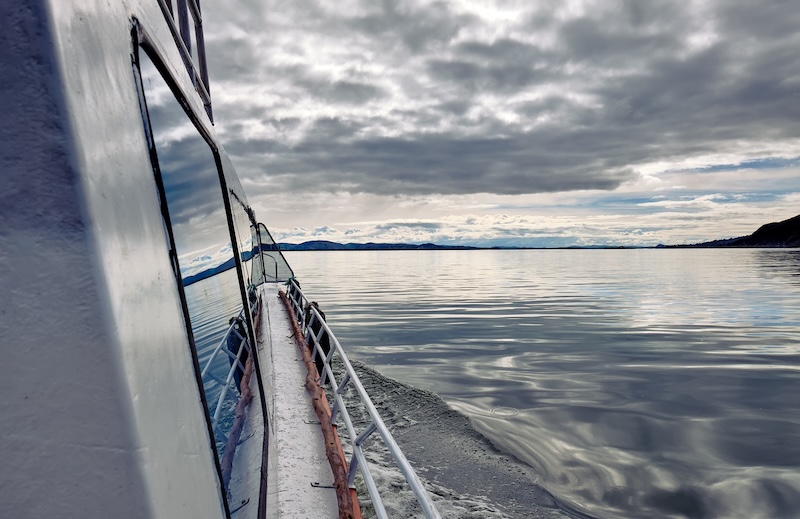
For travellers coming from Cusco there is a different way to sleep on the lake: a heated dome with a transparent roof, pitched among the Uros islands. The night bus does the road while you sleep, and the second night is spent under the Milky Way at 3,812 metres. It costs more, 282 dollars for three days, and it ends in Puno rather than Cusco. Details on the sky glamping tour.
7. The Aymara shore
The southern road out of Puno follows eighty kilometres of shoreline through Aymara country. The carved doorway of Aramu Muru in a red cliff. The raised fields at Waru Waru that fed the altiplano before the Inca. The chullpas at Molloco without the coaches, and lunch in the colonial town of Juli. It is a day for people who have done the islands and want the mainland. The Aymara route is 40 dollars. Read our note on meeting Aymara communities first.
8. The birds in the reeds
The totora beds are a wetland. The lake has a bird found nowhere else, the Titicaca grebe, and it cannot fly. Herons, ibis and Andean gulls work the channels, and the reed edges on the way to Uros are the easiest place to see them. Our post on birdwatching around Puno lists what to look for. The fish are stranger still, and the lake’s biggest native one has not been seen since 1962. That is in our piece on the fish of Lake Titicaca.

Two things people expect that the lake does not do
Swimming. The water rarely gets above twelve degrees, and the sun at this altitude burns in minutes. People wade at Taquile’s harbour and regret it.
Isla del Sol in a day. The sacred island of the Inca origin story is on the Bolivian side, reached from Copacabana. That is a border crossing and three hours from Puno. It is a separate trip, not an afternoon. Our post on getting from Puno to Bolivia explains how to add it.
How many days to give the lake
- One day. The full day tour: Uros and Taquile, lunch on the island, back by five.
- Two days. The Amantani homestay, which adds the night, the sunset climb and the dance. Or the full day plus Sillustani the next afternoon, 68 dollars for both.
- Three days. The two day tour, then the Aymara route or Sillustani, and a free evening for the sunset.
- From Cusco with the road built in. The two day tour from Cusco takes the daytime bus with its five stops and follows it with the full day on the lake. The six day package does Machu Picchu first and the lake last, which is the right order for the altitude.
When to go
May to September is dry, bright and cold. The water is flat in the morning and the Bolivian peaks show from the middle of the lake. It is the season for the crossings. November to March brings afternoon rain and wind, and the return from Taquile can be rough. The islands are worth seeing under any sky. We leave earlier in those months to keep the long crossing in the calm half of the day. Month by month is in our Puno weather guide.
All eight of our Lake Titicaca tours sit on one page with their prices. Half a day at Uros up to three days from Cusco. Pick the days first and the tour follows.
Getting here
From Cusco there are three ways, and they suit different people. The Route of the Sun day bus stops five times, four sites and a lunch, and takes ten hours for 55 dollars. The night bus does the road while you sleep for 45. A private car runs hotel to hotel in seven to eight hours, 350 dollars for the vehicle. All three are set side by side in our Cusco to Puno options post.
From Lima, fly to Juliaca and drive the last hour to Puno. Our Juliaca airport guide explains it, and we run the airport transfer. For where to sleep in town, our hotel guide for the lake and our guide to Puno itself cover the rest.
Questions we get asked
Is Lake Titicaca worth visiting?
Yes, if you give it the islands and not just the view from Puno. We wrote a longer answer to whether the lake is worth your days, including who should skip it.
What can you do at Lake Titicaca in one day?
Uros in the morning, Taquile at midday with lunch, and the crossing back in the afternoon. That is the full day tour, and it is the right answer for most people with one day.
Which island should I choose?
Uros for the reed and the families, Taquile for the walk, the weaving and the lunch, Amantani for the night. If you can only do one, do Taquile with the Uros stop on the way, which is what the full day does.
Do I need a guide?
The islands are community run, and the visits are arranged through them. Fees, boats and rotas are things a guide handles. On your own you would spend the day at the harbour negotiating. Go with someone who runs the boats, and the day runs itself.