
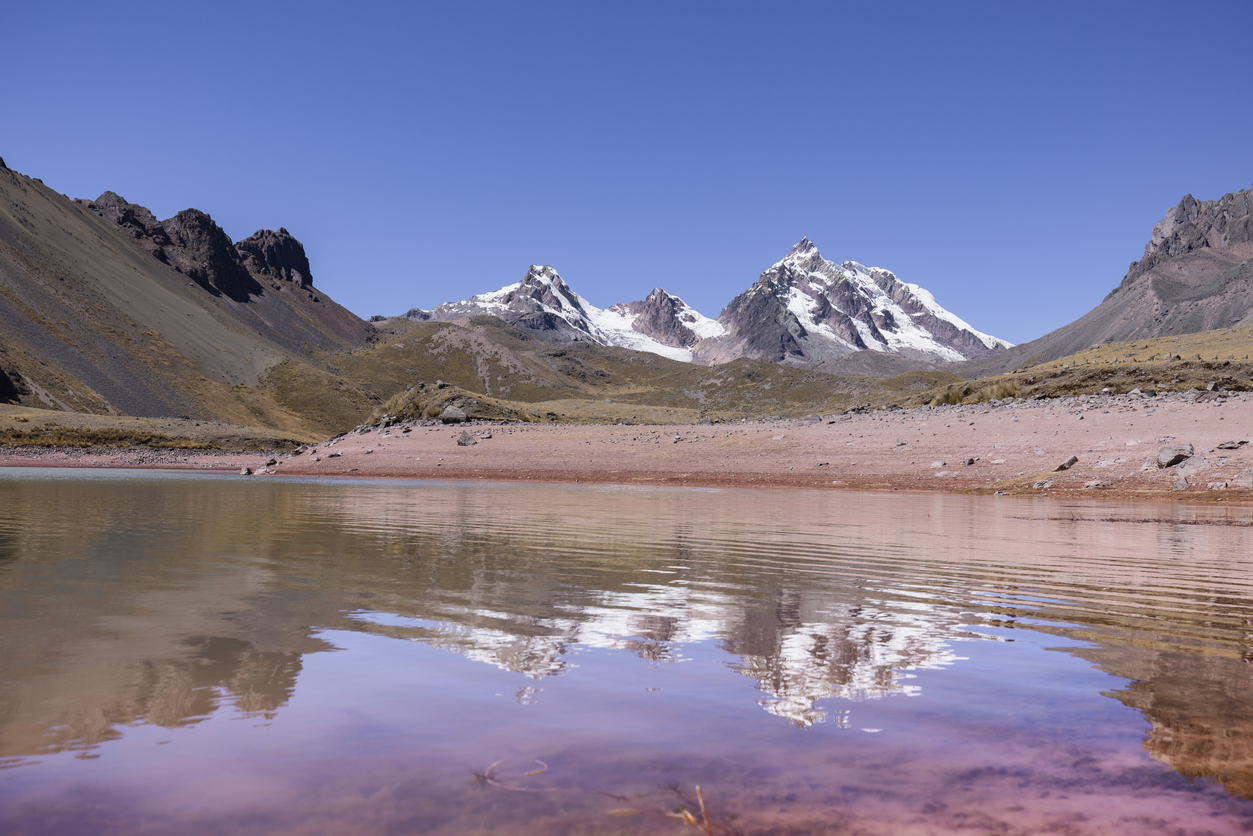
Ausangate rises to 6,384 metres in the Cordillera Vilcanota, south east of Cusco. It is the highest mountain in the Cusco region and the fifth highest in Peru.
Those are the facts that go in a guidebook. They explain almost nothing about why this particular mountain matters.
Once a year, tens of thousands of people walk up onto its flank to attend a religious festival at nearly 4,800 metres. That is the fact worth understanding.

An apu is not a metaphor
In the Andes an apu is a mountain understood as a being. Not a symbol of one, and not a place where a spirit is thought to live. The mountain itself.
Apus have relationships with the communities beneath them. They are addressed, given offerings, and held responsible for water, weather and the health of animals. The relationship runs both ways and it carries obligations.
Ausangate is the principal apu of the southern Cusco region. Herding families in Ocongate and Pitumarca live under it and in relation to it, and their alpaca graze on water that comes off its ice.
That is worth carrying with you if you walk there, because it changes what you are standing in.
Qoyllur Rit’i
Each year, in the weeks before Corpus Christi, pilgrims converge on the Sinakara valley on Ausangate’s flank for the festival of the Lord of Qoyllur Rit’i.
The name is usually translated as star snow, or snow star.
Pilgrims arrive organised into groups traditionally called nations, coming from different regions with their own dances, musicians and costumes. They walk in from the roadhead at Mahuayani and camp in the valley. The sanctuary sits at around 4,700 metres, in cold that most visitors are entirely unprepared for.
UNESCO inscribed the pilgrimage on its Representative List of the Intangible Cultural Heritage of Humanity in 2011.
One correction worth making. This is routinely described as an ancient Inca ritual, and that is not accurate. Qoyllur Rit’i is a Catholic pilgrimage, centred on an image of Christ on a rock, layered over older Andean practice tied to the mountain and to the reappearance of the Pleiades. It is genuinely both, and it has been both for centuries. Calling it purely pre Hispanic erases the people who actually practise it.

The ukukus and the ice
Within the pilgrimage there are figures called ukukus, sometimes pabluchas, who wear shaggy dark costumes and speak in a high voice. In the stories they are part bear and part human, caught between the human world and the mountain, and during the festival they act as its guardians and keep order.
The ukukus climb higher than anyone else, up onto the glacier itself, and they spend the night up there.
Historically they cut blocks of ice from the glacier and carried them back down on their shoulders. The ice was treated as holy, taken home, melted, used as medicine and for the fields.
That practice has largely stopped.
The reason is not a change of belief. It is that the glacier is retreating, and the communities themselves decided to stop cutting it.
Sit with that for a moment. A ritual that ran for generations was ended by the people who performed it, because the thing it was performed on is disappearing. Not by a government, not by a heritage body. By the pilgrims.
There are few clearer accounts of what a warming Andes actually costs, and it is happening on the mountain this article is about. The same retreat is measured a few hours away at Quelccaya, where plants coming out from under the ice have been dated at around five thousand years old.
Should you attend?
Probably not, and we say that carefully.
Qoyllur Rit’i is a religious event, not a spectacle. Tens of thousands of pilgrims camp at 4,700 metres with almost no infrastructure. It is bitterly cold, the walk in is long, and the people around you are there for reasons that have nothing to do with tourism.
Visitors do attend, and they are not turned away. But turning up as a spectator to photograph other people’s devotion, at an altitude you may not handle, is a decision worth examining rather than making casually.
If your dates fall near the festival, tell us. The roads and lodging in the district fill, and it affects everything else in the area whether you attend or not.
Where Vinicunca fits
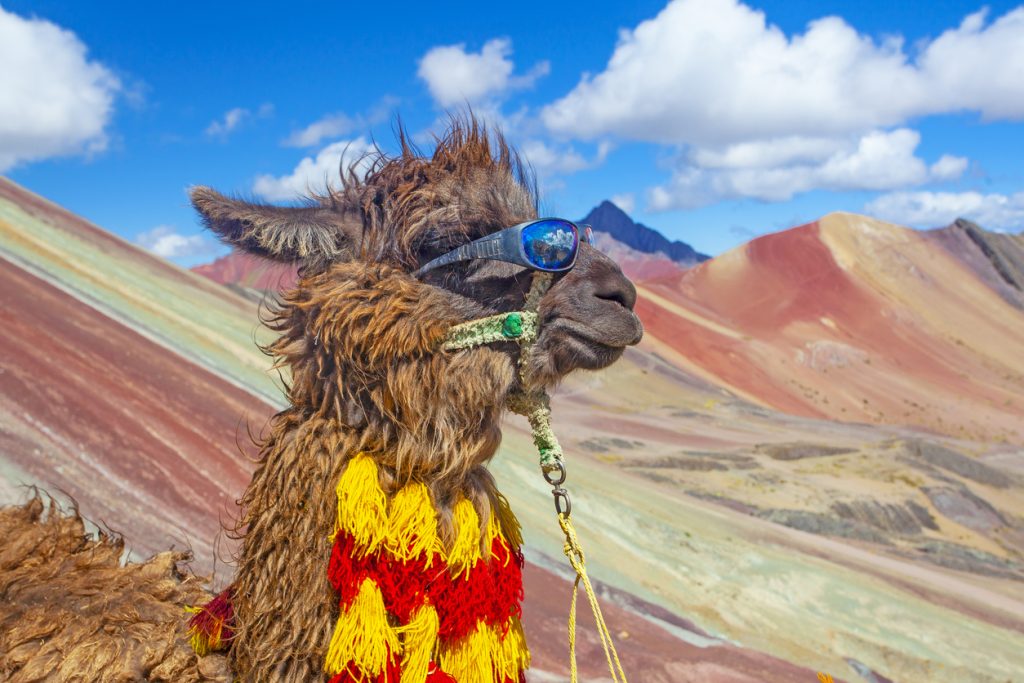
Vinicunca, the striped ridge sold as Rainbow Mountain, sits on the western edge of the Ausangate massif.
Hundreds of people a day stand on Ausangate’s foothills to photograph it. Most of them go home without ever properly seeing the mountain they were standing on, because Vinicunca faces the other way and the tour turns round.
That is not a criticism of anyone. It is simply what the itinerary does. We have written honestly about whether Vinicunca is worth going to at all, and for many people the answer is yes.
But it is not the same as seeing Ausangate.
Seeing the mountain properly
The village of Pacchanta sits at around 4,300 metres, directly beneath the glacier, on the eastern side.
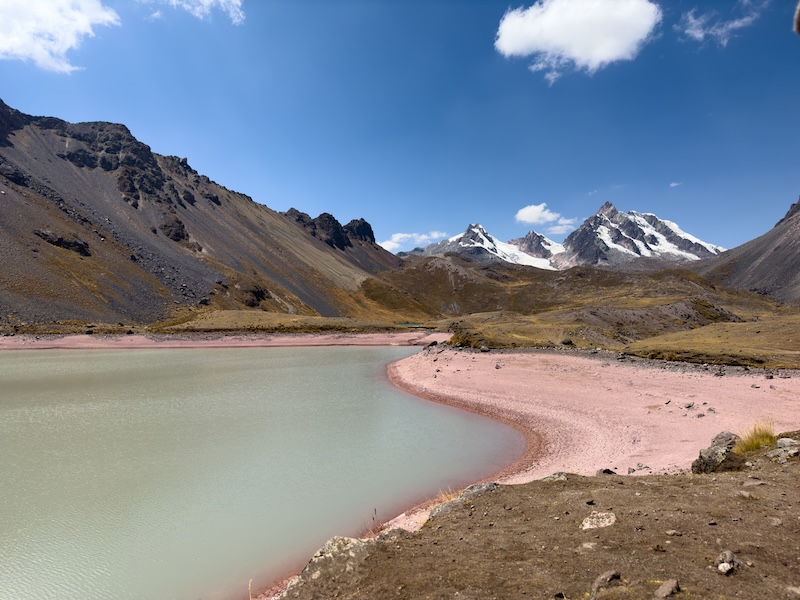
From there a circuit climbs past seven glacial lagoons, each one fed by meltwater carrying rock flour off the ice, which is what gives them their colour. The glacier stands above you for most of the walk. Below the village there are thermal pools, walled by the community, looking straight at it.
Our Ausangate 7 Lakes day trip is the shortest honest way to do that from Cusco. Three to three and a half hours on foot, no technical ground, and the hot springs at the end. It is the hardest day trip we run and the one people talk about longest.
Longer treks circle the whole massif over four or five days. That is the fuller answer if you have the time and the acclimatisation.
When to go
May to September. Dry, hard frost at dawn, clear skies, and the light the lagoons need to show colour.
The festival falls in the weeks before Corpus Christi, which moves each year and usually lands in late May or June. Weather is at its best then and the district is at its busiest.
November to March brings rain and snow on the higher ground, and the last stretch of road becomes unreliable.
The short version
Ausangate is 6,384 metres, the highest mountain in the Cusco region, and the principal apu of southern Peru.
Tens of thousands of pilgrims come to the Sinakara valley on its flank each year for Qoyllur Rit’i, a pilgrimage that is Catholic and Andean at once, UNESCO listed since 2011.
The ukukus who climb to the glacier once carried blocks of ice down as holy water. They stopped, because the ice is going.
Almost everyone who visits Rainbow Mountain stands on this mountain and never sees it.